Intel reportedly denies RMA for crashing Core i9-14900K CPU due to liquid metal thermal paste usage
Advertisement
The Core i9-14900K owner had reportedly approached Synnex, a retailer in Hong Kong, to RMA his 24-core Raptor Lake Refresh chip because it had suffered from theinfamous instability issues. However, the retailer had gotten back to the owner with a negative response, claiming that Intel had rejected the RMA because it didn't comply with the requirements.
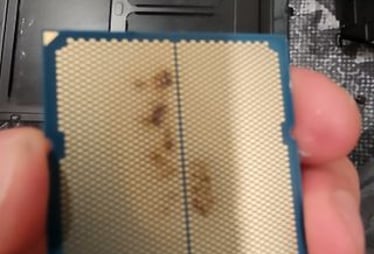
Apparently, the liquid metal had corroded the processor's integrated heat spreader (IHS), removing the chip's markings, including the processor model, batch number (FPO), and 2D Matrix (ATPO).
Advertisement
It's not an excuse that Intel suddenly made up on the spot, either. The chipmaker hasit in writingthat using Liquid Metal Thermal Interface Material (LMTIM) can void the processor's warranty. Due to liquid metal's corrosive nature, it may remove the markings on the Intel processor, which are essential during the verification process for warranty claims.
Liquid metal usage has proliferated over the last few years. Because it incorporates different metal alloys, liquid metal offers excellent thermal conductivity that exceeds the cooling performance of standard thermal paste. However, liquid metal is electrically conductive, so improper application can kill your components—for example, if the liquid metal drips over to capacitors on the chip or the pins.
Liquid metal reacts differently to different materials, such as copper, nickel, or aluminum. For instance, liquid metal and aluminum don't gel, so vendors recommend using a copper heatsink. Modern processors come with a nickel-plated copper IHS, so there's no problem with liquid metal. However, it will "stain" the IHS and obfuscate the markings if given enough time. That's why, in the Core i9-14900K's case, the liquid metal didn't kill the Raptor Lake Refresh chip but rather eroded the surface.
Using liquid metal isn't worth the risk for the average consumer. It's great for lowering CPU temperatures if you're a hardcore enthusiast who likes to overclock and wants to maximize cooling. If that's the case, you'd probably want to delid the chip and replace the TIM with liquid metal rather than just applying it on the surface of the IHS.